

Picking gear is one of the more confusing parts of getting into golf, and honestly it never fully stops being confusing. But the clubs, balls, and bits in your bag genuinely shape how you play. This guide walks through the equipment that actually earns its place, so you can build a setup that works for the game you have now.
Here’s everything worth knowing.
Key Takeaways
- The guide covers essential golf gear, including clubs like drivers (e.g., Titleist TSR2), fairway woods, irons, wedges, and putters such as the SuperStroke Zenergy Pistol Tour Grip.
- Choosing the right golf balls can impact performance. Examples include Titleist Pro V1 for balance ($42.95/dozen) or Callaway Chrome Soft X for control ($39.99/dozen).
- Golf bags improve organization with options like lightweight stand bags or durable cart bags by brands like Titleist. Add tees, towels, ball markers, and divot tools to stay prepared.
- Weather essentials enhance play in all conditions: rain gloves (TaylorMade RainControl at $73), umbrellas (Titleist 68″ Tour Double Canopy at $126.70), hats, sunscreen with SPF 30+, and sunglasses protect golfers on sunny or wet days.
- Advanced tools like Trackman 4 launch monitors ($22,495) help serious golfers refine their game through detailed swing data analysis and improved accuracy insights.
Must-Have Golf Clubs

Your clubs are where everything starts. Each one has a job, and once you understand what that job is, the whole game gets a little less mysterious. Here’s how the main types break down.
Driver
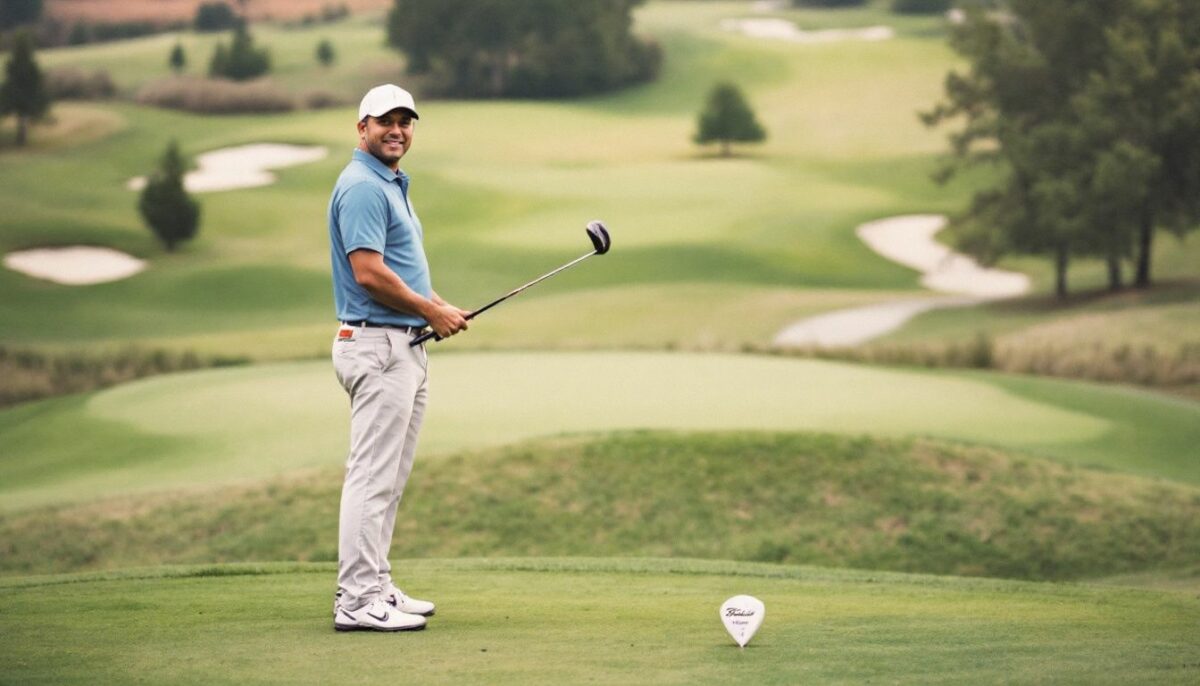
The driver is the club you pull out for big shots off the tee. It’s built for distance and for handling serious clubhead speed, and picking one that suits you can genuinely change how your rounds go, both for accuracy and power.
If you’re still learning, a forgiving driver like the Callaway Paradym X is a friendly place to start (watch details here). Players with a more repeatable swing often reach for something like the Titleist TSR2, which rewards control over swing speed.
A launch monitor takes the guesswork out of choosing. Tools like Trackman 4 or SkyTrak read your ball spin, drag, and more, so you can match a driver to how you actually swing rather than how you hope you swing.
Get the driver right and those intimidating holes with tricky doglegs and long fairways stop feeling like a coin flip. It really is the anchor of the set.
Fairway Woods
Once you’re off the tee, fairway woods take over on the long approaches. They handle the shots that need both power and precision from the fairway or the rough, and their higher loft gives you more control than a driver while still covering ground.
Most come with graphite shafts and stainless steel or titanium heads. The 3-wood and 5-wood are the usual suspects, and they suit just about anyone. Their real strength is adaptability, whether you’re dealing with an awkward lie or trying to reach a par-5 green in two.
As Ian Woosnam once put it:
The right club makes all the difference.
Give them a wipe after your round, too. Dirt in the grooves quietly kills spin.
Irons
Where fairway woods bring power, irons bring precision. This is your bread and butter from roughly 100 to 200 yards, and they cope with whatever lie you find, short grass or light rough alike.
Irons typically run from 3 to 9. The lower numbers hit farther, the higher numbers climb higher.
For the tighter approach shots, most golfers lean on a pitching wedge or gap wedge. And these days nearly every iron has a cavity-back design, which forgives off-center hits and saves you from your worst swings. Blades are still around and still loved by the pros for the control they offer, but they punish a mishit without mercy.
Dial in the right iron set and consistency stops feeling like luck.
Wedges
Irons get you close. Wedges finish the job. This is the short-game crew, the clubs you turn to for chips, pitches, and getting out of trouble. A pitching wedge handles the longer approaches comfortably, while a lob wedge sends the ball up high and drops it soft near the flag.
Stuck in a bunker? That’s what the sand wedge is for, and a clean one at that.
Keep the grooves sharp and clean, because that’s what puts spin on the ball. A quick pass with a wire brush after each round does it. Well-kept wedges are the difference between a scrambled par and a wasted stroke.
Putter
More strokes are won and lost on the green than anywhere else, so a good putter matters more than most beginners think. The SuperStroke Zenergy Pistol Tour Grip is a favorite of players like Jordan Spieth. The pistol shape gives you a steadier hold, and the ridge underneath helps square the face.
It weighs 51g and comes in seven colors if you like your gear to match.
Another solid pick is the Golf Pride MCC Align Grip at $12.99. It’s a hybrid of rubber and cord that shrugs off any weather, and its Align Technology keeps your hands consistent, which pays off whether you’re grinding through putting practice or standing over one that counts.
Essential Golf Balls
The ball you play changes more than people expect. Some are built for control, some for distance, and the trick is matching that to what you need from your game.
Titleist Pro V1
The Titleist Pro V1 has earned its reputation. With a compression of 87-90, it lands right in the sweet spot between soft feel and control. Those 388 dimples do real work, too, tightening up spin and steadying ball flight.
At $42.95 per dozen it isn’t cheap, but it holds up round after round and feels the same every time. Pros trust it worldwide for exactly that reason: it goes long off the driver and behaves on the green.
Callaway Chrome Soft X
If you want control and speed together, the Callaway Chrome Soft X delivers. Its compression rating of 100 gives you a firm, precise feel, and the alignment aids make it easier to line up and commit to a target.
Priced at $39.99 per dozen, it’s a strong value. This one suits golfers chasing spin and distance who don’t want to give up accuracy to get there.
TaylorMade Tour Response
The TaylorMade Tour Response balances performance and price nicely. At $37.99 you get a soft feel with genuinely good control, and the 70-compression rating helps it travel while still grabbing on approach shots.
It’s a smart pick if you care about quality but also about your wallet.
The three-piece construction gives it greenside control that punches above its price, and with durable materials and dependable spin, it suits mid-level to advanced players who want to keep improving without overspending.
Golf Bag Essentials

A well-packed bag quietly saves your round. Fill it with the right tools and you’re covered for the shot, the mess, or the small surprise the course throws at you.
Golf Bag
A bag does far more than carry your clubs. It keeps your whole kit organized and where you expect it, and if you like walking, a lightweight one saves your legs over 18 holes.
Plenty of bags add pockets for tees, towels, and a water bottle, which matters more than you’d think on a long, hot round.
Match the style to how you play. Stand bags suit walkers; cart bags sit securely on a cart. Brands like Titleist build durable ones with dividers that keep your clubs from banging around on the course or on the road.
A good bag lasts for years and makes every trip to the course a little smoother.
Tees
Tees are tiny, but they matter. Lifting the ball off the ground gives you a cleaner strike and better control. The Pride Professional Tee System is a longtime player favorite.
At $7.75, it’s about as low-stakes as gear gets.
Plastic or wooden comes down to preference. Wooden tees are the classic, eco-friendly choice but snap fairly easily. Plastic ones last longer but can scuff a club face over time. Either way, stash a handful in your bag so you’re never caught short before a drive at *The Country Club* or anywhere else.
Towels
A towel earns its keep. It wipes mud off your clubs, dries sweaty hands, and mops up whatever spills in your bag. The TaylorMade Tour Towel is a good one, generously sized at 24″ x 42″.
At $30.99, it gives you plenty of surface to clean balls and clubs after a scrappy round.
Clip it to your bag and it’s always within reach. A damp one even wipes your shoes down before you step into the clubhouse. And clean gear simply plays better.
Ball markers and divot tools round out the setup nicely.
Ball Markers and Divot Tools
A ball marker just tracks where your ball sat on the green. Small thing, but it keeps play moving and your line honest. Some people use a coin, others carry a marker with a bit of personality.
They clip onto a pocket, hat, or glove, so they’re never far.
Divot tools fix the marks a ball leaves when it drops onto the green. The Price Team Effort Repair Tool runs $34.99 and is built to take regular use. Fixing your marks is basic course courtesy, and it leaves the green smoother for the group behind you, and for your own putt later.
Key Accessories for Performance
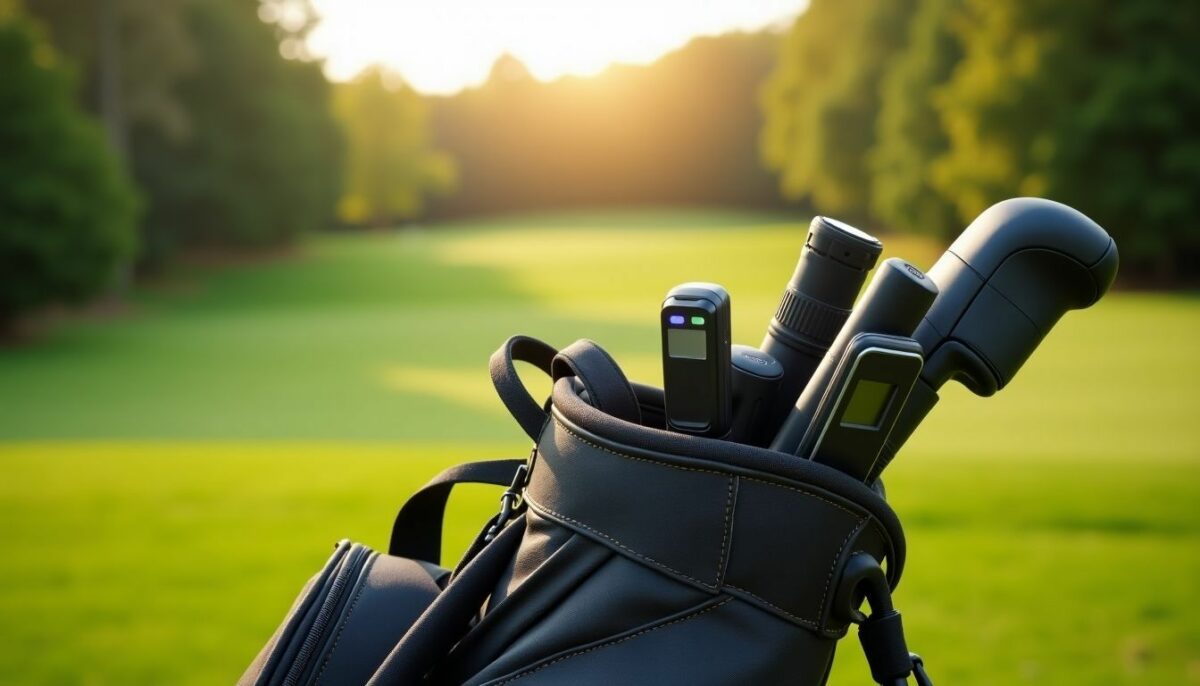
The right gadgets take real guesswork out of a round. Rangefinders and GPS watches give you accurate numbers when you need them.
Rangefinders
A rangefinder makes distance a solved problem. The Bushnell Tour V6 Shift costs $399.99 and reads up to 1,300 yards with pinpoint precision, which is why it’s a go-to for players who want numbers they can trust.
Watching the budget? The Shot Scope Pro L2 performs well at $149.99 with a 700-yard range.
With laser accuracy and simple controls, these cut the “how far is that, really?” out of your game, in a tournament or a casual round. Fewer guesses usually means fewer strokes on the card.
GPS Watches
GPS watches bring precision to every shot. The Garmin Approach S70 runs $699.99 and pairs 14 days of battery life with deep analytics for players who want to dig into their numbers. On a tighter budget, the Shot Scope V5 costs $279.99 and holds up for two full rounds per charge.
Both give you clean distances to hazards, greens, and fairways right there on your wrist. You can track stats like ball spin or driving accuracy without ever pulling out your phone mid-round.
Training Aids
Training aids do for your swing what GPS does for your yardages: take out the guessing. The Perfect Practice Putting Mat is a genuinely useful one for putting. At $174.99 it measures 274 x 15 cm and rolls smooth and true, like a real green.
You can groove your stroke without ever leaving the house.
For grip work, the SKLZ Golf Grip Trainer is a bargain at $14.99. It’s tiny at 0.71 x 7.87 x 4.49 inches, so it slips into any bag for practice on the go.
Small tools, real gains.
Weather-Preparedness Essentials

The weather won’t wait for you, so a little prep goes a long way. The right gear keeps you dry or cool on the days the forecast can’t decide what it’s doing.
Umbrellas
Rain can roll in on any round, which makes an umbrella an easy call. The TaylorMade 60″ Single Canopy is a solid casual pick at $39.99, affordable but sturdy enough for a light drizzle or a sudden gust.
Willing to spend a bit more? The Titleist 68″ Tour Double Canopy is the standout, built tough and ready for wind. At $126.70 it protects well on wet days and looks the part while doing it.
Speaking of wet days: rain gloves.
Rain Gloves
An umbrella keeps you dry, but soggy hands will still wreck your grip. That’s where rain gloves come in. The TaylorMade RainControl Gloves hold on in genuinely wet weather, even when it’s really coming down.
At $73.00, they’re a dependable fix for miserable conditions.
They keep your control steady and your swing smooth on slick fairways. Here’s the odd part most golfers come to love: they actually grip better the wetter they get.
If you play anywhere with unpredictable skies, keep a pair in the bag.
Sunscreen
Golf means hours in the sun, and sunscreen is what keeps those UV rays from doing damage. Skip it and you’re looking at burns now and worse later, from premature aging to skin cancer.
Reach for SPF 30 or higher for a long day outdoors, and put it on generously before you tee off.
You’ll sweat it off as you play, so reapplying matters. Keep a small tube in your bag for a quick touch-up between holes, and pick a non-greasy formula so your hands stay clean enough to grip a club.
Sort your sun protection and you can think about your swing instead of your skin, which is exactly why hats belong in this section too.
Hats and Caps
A hat shields you from the sun and cuts glare so you can actually see your target. A well-fitted cap keeps sweat out of your eyes on those long, bright rounds, and a wide-brim style adds cover for your face and neck against UV.
Lightweight cotton or polyester stays comfortable even in the heat. Some golfers stick with brands like Titleist or Callaway for the quality, and keeping a few on hand lets you match an outfit without giving up the function that matters most.
Apparel for Comfort and Performance

What you wear affects how you play more than it should. Good gear keeps you cool, loose, and ready for the next swing.
Golf Shoes
Golf shoes aren’t just footwear, they’re traction. The soles grip the ground and keep you planted on wet grass or an uneven fairway. Unlike running shoes, they’re built for lateral movement and for walking miles across a course.
Precision needs a stable base, and a well-designed shoe supports your balance on every shot. FootJoy and Nike both make styles that blend comfort with durability, so your feet stop being something you think about.
Good spikes genuinely help your scores, and they keep your feet from wearing out before the back nine.
Golf Belts
A golf belt is more than a fashion choice. It gives you a bit of support through your swing and over a long walk, and it keeps you comfortable during a full round. A secure fit is one less thing distracting you.
Most are made from tough materials built to take heat and rain.
The right one even factors into weather prep. Adjustable designs handle warm days or layered outfits, leather holds up over time, and elastic gives you flexibility to move freely.
Comfort counts as much as looks here, so don’t overlook the belt when you’re packing your *golf bag*.
Sunglasses
Good sunglasses protect your eyes and sharpen what you see out on the course. The Oakley Radar EV Path runs $231 and offers 16 lens colors to match whatever the light is doing.
The Henrik Stenson Stinger 3.0 costs $148.06 and is designed specifically with golf in mind.
Polarized lenses knock down glare and clean up your view on bright days. Sturdy frames stay put through your swing and the walk between holes, and a lightweight design keeps them comfortable while you look sharp doing it.
Advanced Equipment for Serious Golfers

If you’re serious about tightening up your game, the advanced stuff pays off. These tools give you real precision and data you can actually act on.
Launch Monitors
A launch monitor makes practice honest. The Trackman 4, at $22,495, delivers exact numbers on swing speed and ball flight, and its battery runs over four hours. The SkyTrak is the lighter option, just 1.7 lbs with a five-hour battery.
Golfers use these to break down spin rates and distances instead of guessing, and both are trusted by serious players around the world. Add one to your setup and you’ll improve faster than trial and error ever gets you.
Grips and Covers
A grip can quietly transform your swing. The Golf Pride MCC Align Grip costs $12.99 and weighs 51 grams, and it’s a smart pick for most players thanks to the control and hand alignment it gives you.
If you want something plusher, the SuperStroke Zenergy Pistol Tour Grip is excellent. At $29.99 and the same 51 grams, it feels soft but firm in the hands.
Headcovers, meanwhile, keep your clubs safe from scratches and grime, with a little style thrown in. A durable one protects your gear on the road and in rough weather, rain or blazing sun.
Which brings us back around to launch monitors, the tool serious players lean on to sharpen accuracy and dial in distance.
Conclusion
Golf is simply more fun with gear that fits you. The right clubs, balls, and tools give your game real room to grow. Don’t skip the weather protection, the comfortable shoes, or a good glove either, because every piece plays a part in how you feel and how you improve.
Now go get out there.
FAQs
1. What are the essential golf equipment items for beginners?
You really only need a handful to start: golf clubs, a sturdy bag, comfortable shoes, and a glove for grip. Toss in some balls with decent spin, and maybe a set of alignment sticks to work on your swing.
2. How do I choose the right golf clubs?
Begin with versatile options like fairway woods, a pitching wedge, and a putter. Match your clubs to your skill level and how you play, and don’t overthink it. Plenty of players stick with brands like Titleist for the quality.
3. What should I wear on the course?
Dress codes vary, but most lean toward modest. A golf shirt or a tank top with trainers or proper shoes gets you in at most places. Steer clear of T-shirts unless you know they’re allowed, and check before you head out.
4. Is there any gear that’s often overlooked but important?
Yes. A water bottle is easy to forget and matters a lot over a long game. It’s also worth carrying a laser rangefinder or a GPS device for accurate distances, and never leave a reliable umbrella at home when rain’s a possibility.
5. Can I use any type of ball when playing casually?
When you’re starting out, pretty much anything works. As you get better, though, look for balls built for control and spin around the greens, like those from Titleist. It really does change how your shots behave.
6. Why do historical figures like Francis Ouimet matter in modern golfing culture?
Francis Ouimet changed the game by winning The Open Championship as an amateur against the pros, a genuine underdog story. His legacy still inspires everyday players and competitors alike at events like The USGA tournaments worldwide.
Extra Gear Guidance for Beginners
Beyond choosing specific club and ball models, a few gear categories, buying strategies, and simple habits make the game easier when you are starting out. The points below fill in the fundamentals that get you comfortable on the course faster without overspending.
Hybrids: The Beginner-Friendly Alternative to Long Irons
A hybrid bridges the gap between a fairway wood and an iron, combining the power of a wood with the control of an iron. Its forgiving design and larger sweet spot help you connect even on off-center strikes, and the wider sole glides through the rough instead of digging in—making it easier to hit from tricky lies. Many beginners find hybrids far more reliable than traditional long irons, which is why a 4-hybrid is a popular swap for a hard-to-hit 3- or 4-iron. Cavity-back hybrids with graphite shafts are especially confidence-building, adding swing speed without extra effort, so including at least one hybrid in your bag can simplify learning and make full rounds more enjoyable.
The Golf Glove
A golf glove boosts your grip on the club and helps prevent blisters, especially in humid or rainy weather. Most players wear it on their non-dominant hand—right-handed golfers use a left-hand glove. Leather gloves feel softer but wear out faster, while synthetic options are more durable but less breathable. Aim for a snug fit that isn’t tight for the best mix of comfort and control.
Affordable Starter Sets and Used Gear
You don’t need to build a bag piece by piece or buy everything new to get started. A few cost-effective routes cover the essentials while you learn what suits your game:
- Starter and beginner sets. A typical 12-piece starter set includes three woods, eight irons, and a putter—everything needed to play a full round—and many add a hybrid or extra wedge for versatility. Pre-packaged beginner sets bundle the essentials, often a driver, fairway wood, hybrid, pitching wedge, sand wedge, and mallet putter, usually with a bag included. These lightweight, forgiving kits remove the guesswork of choosing each club and make it easier to learn the basic swings.
- Pre-owned clubs. A full set of used, forgiving clubs can cost a fraction of new gear, and many include game-improvement irons or hybrids with graphite shafts. Local pro shops and online stores carry plenty of options; always inspect the clubface, grips, and shafts for damage and wear before buying.
The Sunday Bag
Beyond the usual stand and cart bags, the Sunday bag is a lighter option worth knowing about. It typically holds around seven clubs and weighs only a few pounds, making it ideal for short games, practice rounds, or players carrying a pared-down beginner set. Its minimal size keeps the focus on skill rather than gear, and many models skip the stand entirely to stay as light as possible.
On-Course Apparel and Dress Codes
Most courses enforce a dress code, so it is worth knowing the basics before you arrive. Men are usually expected to wear collared, polo-style shirts; women can opt for collared sleeveless tops or short-sleeve blouses, while tank tops and t-shirts are typically banned. For bottoms, cotton or polyester pants and shorts are the norm, and jeans are often not allowed. Neutral colors like khaki, gray, and navy pair easily with most shirts and satisfy dress codes at courses worldwide, and breathable, moisture-wicking fabrics keep you cool during hot rounds.
Cleaning and Organizing Your Gear
A little upkeep keeps your equipment performing well. Dirt in the grooves of a club affects spin and control, so wipe the face after every shot and use a wire brush for stubborn grime; soapy water handles dried mud. It helps to carry two towels—one lightly damp for cleaning dirt off clubs and balls, and one dry for your hands. Rinse balls at the ball washers found on most courses, and use warm soapy water at home for tougher build-up.
Organizing the bag also saves time and protects your clubs. Keep drivers and fairway woods in the back compartment, irons and hybrids in the center, and wedges and the putter up front for quick access on the green. Group small items—tees, ball marker, divot tool—together, keep a small supply of spare tees so a lost or broken one never interrupts play, and use side pockets for a towel, spare balls, and a water bottle.
A Word on Etiquette
Good gear is only half the picture—course etiquette matters just as much. Repair your divots and ball marks, stay quiet while others are swinging, and follow the dress code. Simple manners like these keep the course in good shape and the game enjoyable for everyone.