
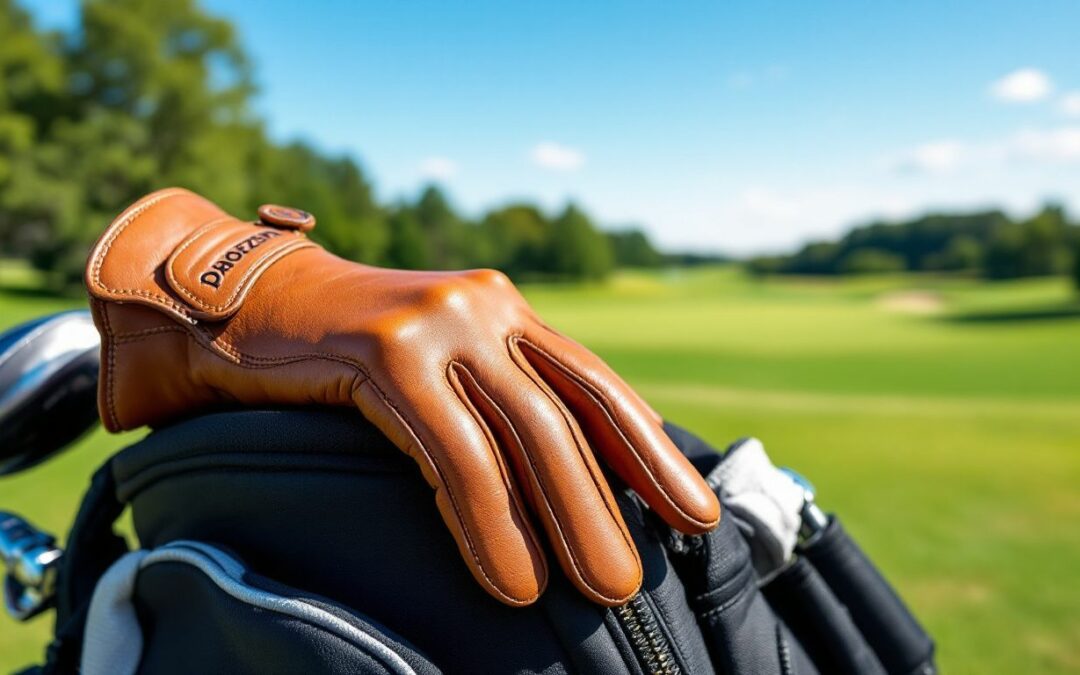
Choosing a golf glove comes down to four decisions, made in order: which hand to glove, which size and cut fit snugly, which material suits your climate, and how much to spend on something you will replace many times. Get those four right and the club stops shifting in your hands; get them wrong and you fight your grip on every swing. This guide walks through each step, then goes deeper on each one.
Key Takeaways
- Choose in four steps: glove your lead hand, measure for a snug size, match the material to your climate, then budget for replacements.
- A glove should fit like a second skin, with no loose fingertips or palm bunching. Between sizes, start with the smaller one.
- Cadet sizing fits wider palms with shorter fingers; picking the wrong cut is the most common fitting mistake.
- Cabretta leather gives the best feel, synthetics handle heat and moisture better, hybrids split the difference. Rain gloves are their own category and grip better wet.
- Plan on roughly 10 to 15 rounds per glove and rotate two or three so each dries fully between rounds.
Four Steps to the Right Glove
If you only read one section, make it this one: the whole buying decision, in order.
Step 1: Glove Your Lead Hand
A glove goes on the hand at the top of the grip: the left hand for a right-handed golfer, the right for a left-hander. That lead hand anchors the club through the swing, so it takes the friction and needs the protection. Check the label when you buy: a “men’s left” glove is aimed at right-handed players. The which hand should you glove section further down covers the reasoning.
Step 2: Measure, Then Pick Regular or Cadet
Two numbers set your size: the circumference of your hand around the knuckles (thumb excluded) and the length of your middle finger. The full routine is in the how to measure your glove size section below; measure before you shop, then use the size chart of the specific brand you are buying, because cuts differ between makers.
Those same two measurements settle the regular-versus-cadet question: fingers short relative to your palm measurement points to cadet, normal proportions to regular. And when you land between two sizes, take the smaller one first: a quality glove stretches and molds to your hand within a round or two, while an oversized glove only gets sloppier.
One quick check confirms the size: with the glove on, the closure tab should reach about three-quarters of the way across the back of your hand, leaving a strip of the hook-and-loop pad free so you can tighten it as the glove breaks in. A tab that barely reaches means too small; one that overshoots the pad means too big.
Step 3: Match the Material to Your Climate
Material choice is really a climate choice. Cabretta leather feels best and suits mild, dry conditions. Synthetics shrug off sweat and humidity, the sensible pick for hot climates. Hybrids put leather where you grip and synthetic where you flex. And if you regularly play in rain or winter cold, dedicated wet-weather and thermal gloves get their own section below.
Step 4: Budget for Replacement, Not Just Purchase
A glove is a consumable, not a one-time buy. Premium Cabretta models deliver the best feel but wear faster under heavy use, while synthetics and hybrids trade a little feel for longer life. Rather than putting the whole budget into one premium glove, most regular players do better with two or three mid-range gloves in rotation. The replacement schedule near the end of this guide explains when a glove is genuinely done.
Here is how this guide’s picks line up.
The Glove Picks at a Glance
Three brands cover most needs; here is how this guide’s picks line up.
| Pick | Verdict | Key models | Known for |
|---|---|---|---|
| FootJoy | Best overall | Pure Touch Limited, Contour FLX, RainGrip, WinterSof | Consistent quality; Cabretta feel across conditions |
| Callaway | Best for durability | Tour Authentic, Opti-Fit, Women’s Tour Authentic | Long-lasting; Griptac finish for extra grip |
| Zero Friction | Best for winter play | Storm, Cabretta Elite | Cold and wet weather; Compression-Fit molds to hand |
The materials, sizing and full pick notes follow below.
Understanding Golf Glove Materials
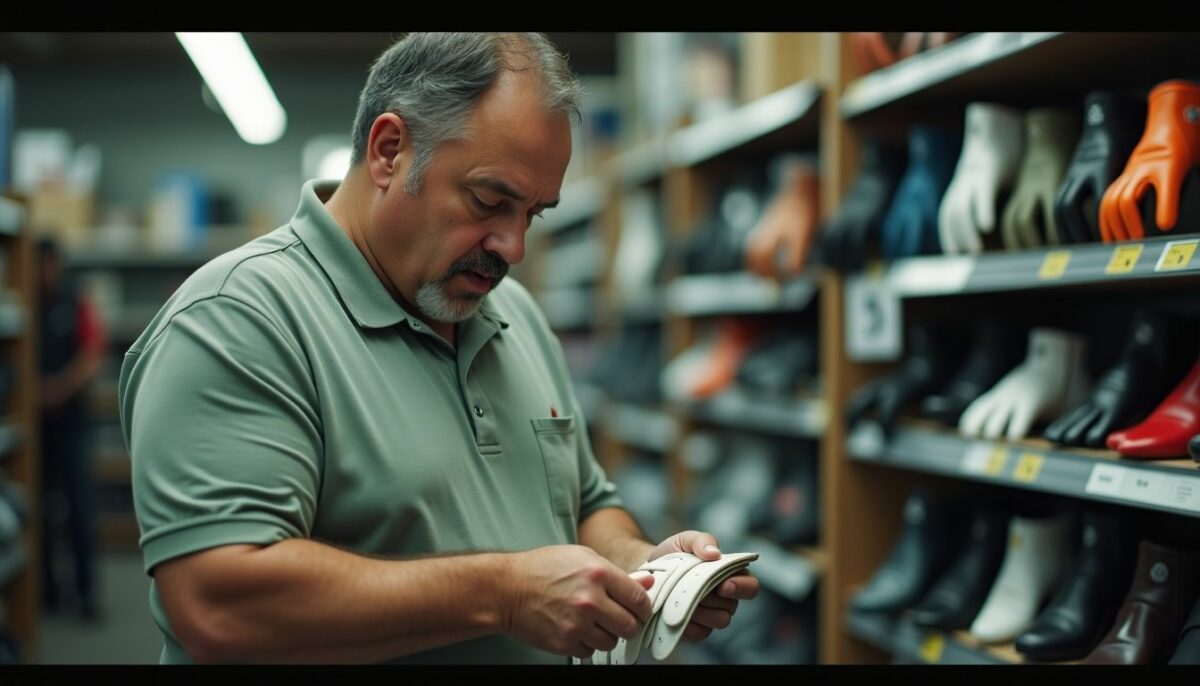
The material a glove is made from affects grip, comfort, and how long it lasts. Each type has clear trade-offs.
Leather vs. Synthetic: Key Differences
Leather golf gloves, usually made from Cabretta sheepskin, have a soft, supple feel. They mold to the hand over time for the “second skin” fit many golfers prefer, and they transmit the most feedback from the grip to your fingers. The trade-off is care: leather stiffens if it dries out badly and wears fast when soaked in sweat.
Synthetic gloves are lightweight, breathable, and generally cheaper. The material holds up better in humid conditions, which makes it a good choice for summer rounds, damp fairways, or range sessions where a leather glove would soften and wear out faster. Synthetics also stretch more, allowing extra flexibility over a long round.
The right glove keeps your grip steady, and a steady grip is the foundation of a repeatable swing.
Hybrid Options for Versatility
Hybrid golf gloves combine the strengths of both materials: Cabretta leather in the palm and fingers where grip and feel matter, synthetic panels across the knuckles and stress points where flexibility and durability matter. The result lasts longer than full leather without giving up much feel, which suits golfers who play often in changing conditions.
The Zero Friction Men’s Cabretta Elite is a strong example, pairing Cabretta leather with the brand’s Compression-Fit technology, a stretch construction that molds to the hand for a close fit. Callaway’s Opti-Fit takes the all-synthetic route with a stretchy Japanese synthetic material. Both come in left- and right-hand versions.
Getting the Fit Right: Regular, Cadet, and Between Sizes
A well-fitted glove supports a steady swing, while a loose one costs you control. Fit problems almost always trace back to the wrong size or the wrong cut.
Regular vs. Cadet Sizing Explained
Regular gloves are cut for hands with standard palm and finger proportions. Cadet gloves are cut for wider palms and shorter fingers; compared with a regular glove of the same size, a cadet has fingers roughly a centimeter shorter and a palm about a centimeter wider. Cadet hands are more common than the small shelf space suggests, and FootJoy, Callaway, Titleist, and TaylorMade all offer cadet lines.
Signs you may need cadet rather than regular:
- Empty material past your fingertips even though the palm fits.
- Leather wrinkling across the palm when you make a fist.
- The closure tab barely reaching its pad, tempting you to size up when the length is right.
- The sizing dead end: smaller sizes will not slide over your palm, larger sizes bag at the fingers.
If two or more sound familiar, try a cadet in your usual size.
The Snug-Fit Checklist
Before you commit to a glove, run through these checks:
- Measure first, then follow the manufacturer’s size guide rather than guessing by feel.
- No loose material at the fingertips; excess length interferes with grip pressure and wears through quickly.
- No bunching across the palm when you close your hand around a club.
- Grip an actual club before deciding: snug everywhere, no pinching at the webbing or seams.
- Between sizes, take the smaller one; gloves stretch slightly with use.
- Confirm the glove matches your lead hand, not your dominant hand.
The Brand Picks: FootJoy, Callaway, and Zero Friction
Three brands reliably cover the main use cases: everyday feel, long-term durability, and bad-weather play.
Best Overall: FootJoy
FootJoy gloves are known for consistent quality across the range. The Pure Touch Limited sits at the top, using Cabretta leather for a soft feel and strong grip, with an elastic closure that molds to the hand. The Contour FLX delivers much of that leather feel at a value price, an easy pick for golfers buying several gloves a season.
FootJoy also covers the weather extremes: the FootJoy RainGrip uses a knitted “autosuede” palm and quick-dry material for wet rounds, and the WinterSof adds warmth for cold days. All are made for both right-handed and left-handed golfers.
Best for Durability: Callaway
Callaway gloves stand out for how long they hold their shape. The Callaway Tour Authentic pairs premium Cabretta leather with a Griptac finish that adds tackiness through the swing, built to keep its softness through repeated use.
For a lower-cost, longer-wearing option, the Opti-Fit’s stretchy synthetic takes humid-weather use better than leather. Women golfers are covered too, with the Women’s Tour Authentic line built on the same leather and finish.
Best for Winter Play: Zero Friction
Zero Friction earns its slot for cold and wet weather. The Zero Friction Storm is made for winter play and handles rain and wind well, helping you stay warm while keeping a firm grip. The Cabretta Elite works as the colder-day everyday glove: its Compression-Fit stretch construction keeps the fit close without adding bulk. One practical note: the Cabretta Elite is sold as a universal one-size glove, which makes it a low-risk online buy if you are unsure of your measurements.
Wet-Weather and Winter Gloves: When One Glove Is Not Enough
Standard leather gloves fail exactly when you need grip most: a soaked Cabretta glove turns slick, and one rain-drenched round can effectively finish it. Wet and cold conditions get purpose-built designs instead:
- Rain gloves use synthetic suede and knit materials that grip better the wetter they get; reviewers at Golf Monthly note the best rain gloves “actually grip better on the club when wet.” They are commonly sold as pairs and worn on both hands, because in the rain your trailing hand loses traction just as fast.
- Winter gloves prioritize warmth: thicker thermal builds, worn as a pair, trading some feel for playable hands in the cold. The FootJoy WinterSof and Zero Friction Storm above are the picks here.
If you play somewhere with a real wet season, a pair of rain gloves in the bag costs little and saves rounds; they also earn their keep in extreme humidity, when even a fresh leather glove gets slippery. For the rest of your bad-weather setup, see our golf apparel guide.
When to Replace a Glove, and How Many to Own
A worn glove quietly costs you grip long before it falls apart. A useful rule of thumb from Golfshake’s survey of its ambassador golfers: most changed gloves every 10 to 15 rounds, sooner in hot weather when sweat breaks leather down faster.
Replace a glove when you see any of these:
- Shiny, slick patches where the palm or thumb texture has worn smooth.
- Holes or thin spots at the palm, heel, or fingertips.
- A stretched, loose fit that bunches or slides during the swing.
- Stiff, crusty, or cracked leather that no longer softens as you play.
The cheapest way to slow all of that down is rotation. Keep two or three gloves in play and switch between rounds, or at the turn on sweaty days, so each one dries completely and recovers its shape. Store them flat rather than balled up in a bag pocket, and follow the care routine below.
The Bottom Line
Work the four steps in order: lead hand, measured size in the correct cut, material that matches your climate, and a budget that accepts replacement. A snug glove in the right cut does more for your grip than any premium upgrade in the wrong size. The reference sections below go deeper, from measuring to care.
FAQs
1. How do I know what size golf glove to buy?
Measure your knuckle circumference (without the thumb) and middle-finger length, then check the size chart of the brand you are buying. The glove should fit snugly with no spare material at the fingertips; between sizes, start smaller.
2. What is the difference between regular and cadet golf gloves?
Cadet gloves are cut with shorter fingers and a wider palm than regular gloves of the same size. If regular gloves always leave empty material past your fingertips, or fit your fingers but not your palm, try a cadet cut.
3. Which hand do you wear a golf glove on?
The lead hand: left hand for right-handed golfers, right hand for left-handed golfers. Rain gloves are the main exception, usually worn as a pair on both hands.
4. How often should you replace a golf glove?
Roughly every 10 to 15 rounds for a regular player, sooner in hot, sweaty conditions or if the palm turns shiny, the fit goes loose, or holes appear at the pressure points.
5. What material golf glove is best?
Cabretta leather for feel in dry conditions, synthetic for durability in heat and humidity, a hybrid to cover both. In actual rain, a synthetic rain glove beats them all.
Why Wear a Golf Glove?
A golf glove does more than complete your look on the course. Its main job is to improve grip and stop the club from slipping, especially in sweaty or humid conditions. The added friction helps you hold the club securely so you can swing with confidence and control.
A glove also shields your hands from the blisters and calluses that come from repeated swings. Many professionals rely on one to protect their hands without giving up feel, which is why a good glove often makes the difference between a confident round and a distracting one.
Which Hand Should You Glove?
Right-handed golfers wear the glove on their left hand, since that is the top, lead hand on the club. Left-handed golfers do the opposite and wear it on the right hand. In both cases, the gloved hand is the one guiding and anchoring the club through the swing.
Some players wear a glove on both hands for extra protection. It is uncommon, but it can help ward off blisters during long practice sessions or tournament rounds where you are hitting far more shots than usual.
How to Measure Your Glove Size
Getting the size right starts with two quick measurements. Using a soft measuring tape, measure the circumference of your hand around the first knuckle, skipping the thumb. Then check the length of your middle finger. Together these two numbers point you to the correct size and to whether regular or cadet sizing will fit best.
A glove should feel snug with no bunching at the fingertips. If you fall between two sizes, start with the smaller one, since gloves stretch a little with use and break in like a well-worn shoe.
How to Care for Your Golf Glove
A little maintenance goes a long way toward keeping a glove comfortable and extending its life. Follow these steps to protect your investment:
- Wash with cold water and a mild detergent to lift out dirt and sweat without harming the material.
- Scrub gently while wearing the glove, which supports its shape and prevents stretching.
- Rinse thoroughly under running water, as leftover soap can stiffen the material.
- Air dry flat for several hours. Avoid dryers and direct sunlight, which can shrink or crack leather.
- Slip the glove back on briefly after rinsing to reshape it as it dries, so the fit stays true.
- Store it in a cool, dry spot inside your bag or an accessories pouch to prevent moisture buildup, and wipe it down with a microfiber cloth after use.
- Rotate between two pairs if you play often, so no single glove wears out from constant use.
Part of our golf gear buying guides.