
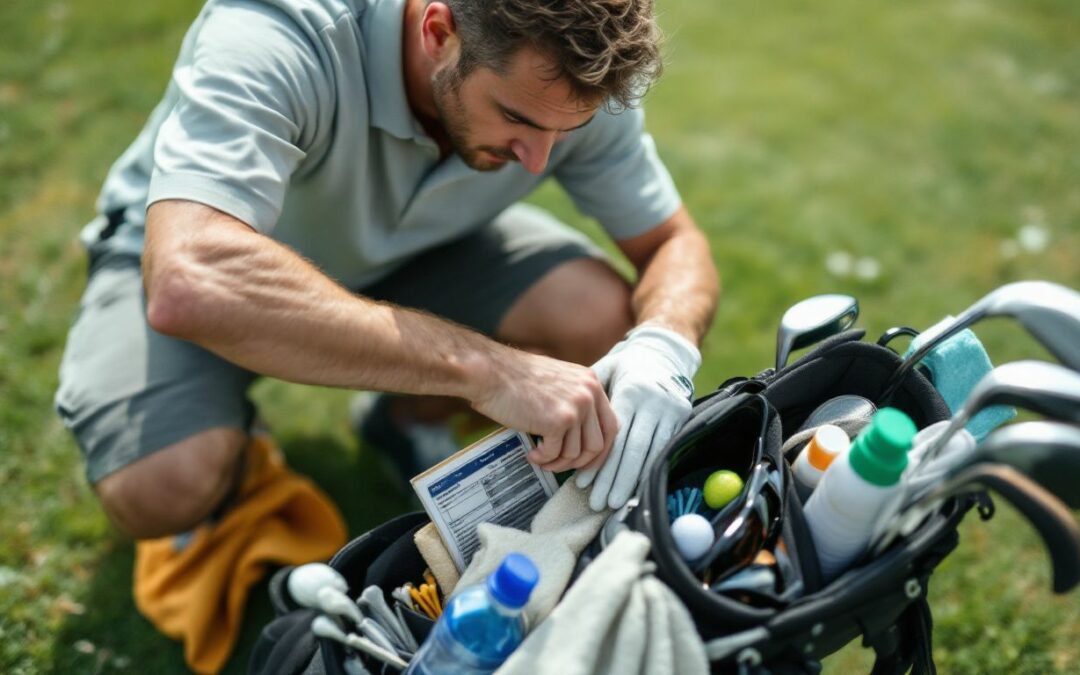
Packing a golf bag well is part of playing well. A clear golf bag checklist keeps you prepared from the first tee to the final green. This guide covers the essential items every golfer should carry for a smooth, focused round.
Key Takeaways
- Pack the essential clubs: driver, fairway woods, hybrids, irons, wedges, and a putter. Keep them clean with covers and a groove cleaner for consistent contact.
- Carry enough golf balls, tees, ball markers, and a divot repair tool to stay ready throughout the round. Bright colors make small items easier to spot.
- Bring weather gear such as an umbrella and rain poncho for changing conditions, plus a jacket, spare gloves, and socks for comfort on the course.
- Stay hydrated with a water bottle and keep snacks or energy bars in your bag pockets to maintain focus during long rounds.
- Add personal items like sunscreen, bug spray, plasters, pencils, a towel, and a notepad to handle small problems before they affect your game.
Essential Golf Clubs
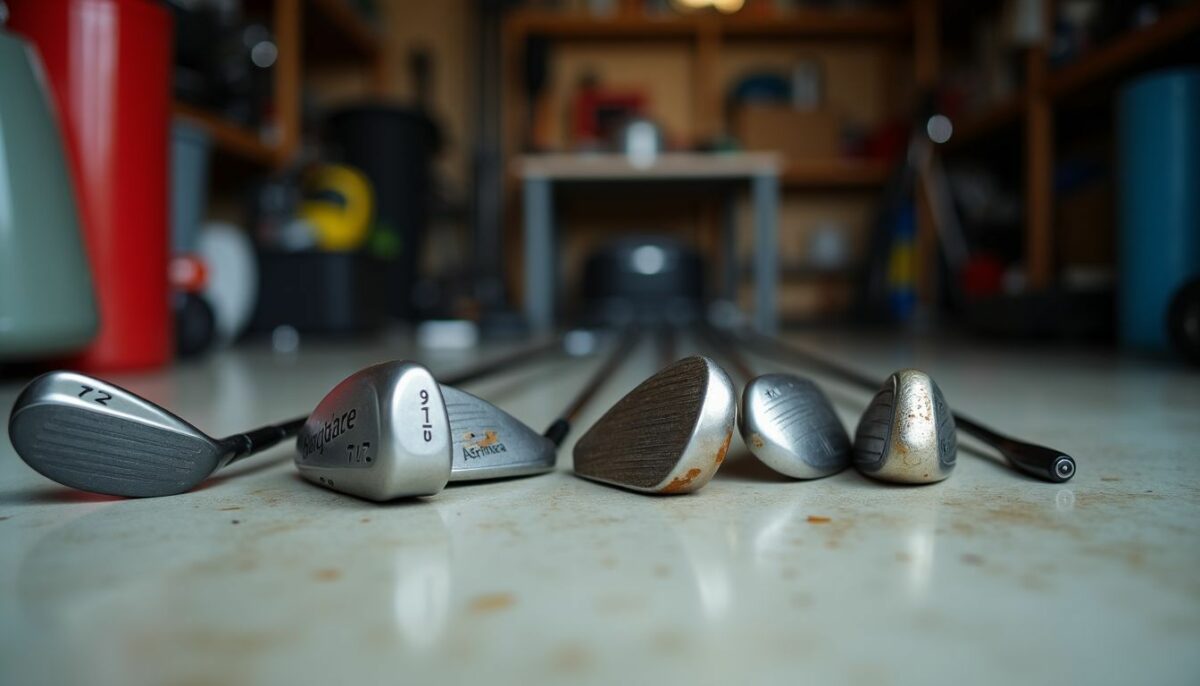
Golf clubs are the core of your game. Carrying the right set for your skill level is the difference between a controlled round and a frustrating one.
Driver, Fairway Woods, and Hybrids
These clubs form the backbone of any golf bag. Together they give you distance, control, and versatility across the course.
- A driver is built for long shots off the tee. It delivers maximum distance and helps you cover open fairways.
- Fairway woods add accuracy on longer approach shots. They perform well from both short grass and light rough.
- Hybrids combine features of irons and woods. They are easier to hit than long irons and useful from tricky lies such as thick grass near a hazard.
- Protective covers keep these clubheads clean and safe from damage in transport.
- Regular cleaning with a groove cleaner keeps performance consistent for every club.
- Choosing clubs matched to your strength and skill level supports better, more repeatable swings.
- Lightweight options can reduce strain if you use a stand bag or walk the course all day.
Irons, Wedges, and Putter

Irons, wedges, and a putter round out the set every golfer needs to play a full course.
- Irons handle mid-range shots. They are numbered by loft and distance, typically 3 through 9. Lower-numbered irons hit farther, while higher numbers offer more accuracy.
- Wedges cover short-distance and high-loft shots. A pitching wedge suits approach shots, while a sand wedge helps you escape bunkers. Add a gap or lob wedge for finer control near the green.
- The putter is key to sinking putts on the green. Choose one that feels balanced and suits your stroke; some players prefer blade putters, others use mallets for extra stability.
Keep each club clean and protected with covers between uses.
Golf Balls and Accessories
Golf balls are easy to lose, so pack more than you think you need. Small tools like ball markers and a divot repair tool save time and protect the course.
Extra Golf Balls and Shag Balls
Carry three to four sleeves of quality golf balls. Backups matter, especially on water-heavy courses. Discard old or damaged balls, since they will not fly true and can hold up your round.
Fresh balls perform better off the tee and help keep your game sharp.
Shag balls are useful for practice. Keep them in a separate pouch or pocket in a stand bag or cart bag. They are ideal for chipping drills without risking your premium balls during training.
Ball Markers and Pitchmark Repairer
Ball markers and pitchmark repairers are small tools with an important job on the greens, and they can make a real difference over a round.
- Ball markers let you mark your ball’s position on the green, keeping the line clear for other players’ putts. Many golfers collect them as well.
- Pitchmark repairers fix the marks balls leave when they land on the green. Repairing them protects the surface and keeps it smooth for everyone.
- Always keep a spare ball marker in your golf bag pockets. Losing one mid-round can slow you down.
- Choose markers with distinctive designs or bright colors. They are easier to spot and add a bit of personality to your gear.
- A sturdy repair tool belongs in every bag. Some double as a groove cleaner or bottle opener.
- Repairing pitchmarks is basic course etiquette. Fixing your marks shows respect for the course and for other players.
Keeping these items ready makes the round more enjoyable and keeps the greens in good shape.
Tees and Tools
Tees and gadgets make life on the course easier. From measuring distances to retrieving lost balls, these small items earn their place in the bag.
Variety of Tees
Carry a mix of tees. Different lengths suit different clubs, with extra-long tees for drivers and shorter ones for irons or hybrids. Plastic tees last longer, while wooden tees are biodegradable.
Brightly colored tees are easier to spot in the grass.
Broken or bent tees only take up space, so toss them out and carry enough to avoid running short mid-round. Keep them organized in your golf bag pockets for quick access.
A well-stocked tee supply keeps play moving. Next, consider tools like rangefinders and ball retrievers.
Rangefinder and Ball Retriever
A rangefinder helps keep pace of play by giving quick yardage readings instead of guesswork. Modern models are compact and fit in a bag pocket. Some offer slope adjustment for hilly courses, which improves accuracy.
Reliable yardages can save time on every hole.
A ball retriever is handy near water hazards or thick brush. It extends your reach to recover stray balls without extra effort, and lightweight designs are easy to carry all day.
A good retriever helps you hold onto both your golf balls and your patience.
Comfort and Weather Gear

Comfort on the course matters in any weather. Pack with changing conditions in mind so you are ready for whatever the day brings.
Umbrella, Rain Poncho, and Waterproofs
Rain can move in quickly. A sturdy umbrella gives fast protection from a passing shower or strong sun, and it stows easily on a golf bag. Many players choose lightweight 60-inch models that shield both the player and the gear.
A rain poncho keeps you dry without much bulk. Unlike a regular jacket, a poncho slips over your clothes and allows a free swing. Waterproofs are important on wet days, especially in climates where the weather changes fast.
Quality waterproof pants and jackets keep you dry and focused on your game rather than on cold, damp conditions.
Jacket, Spare Socks, and Gloves
A lightweight jacket helps on chilly mornings or during sudden weather shifts. It keeps you warm without restricting your swing, and slimmer options pack neatly into a bag pocket so they stay within reach.
Spare socks prevent discomfort from wet grass or sweat, and a fresh pair can help you stay comfortable and focused. An extra golf glove is worth carrying too, since your grip suffers once the first one gets damp or worn.
These are small additions, but they matter over a full round.
Personal and Health Items

A little preparation keeps you comfortable and protected through hours outdoors.
Sunscreen, Bug Spray, and Plasters
Golf means long hours in the sun, so sunscreen belongs in every bag to protect your skin from UV exposure. Look for SPF 30 or higher and water-resistant formulas that hold up to sweat.
Reapply roughly every two hours, especially in summer.
Bug spray is useful when playing near trees or water, where mosquitoes and ticks tend to gather. For extra peace of mind, a compact venom extractor kit can help with unexpected stings or bites.
Pack a few plasters as well, since blisters from new golf shoes are common. These small items make a real difference on a tough day.
Water, Snacks, and Energy Bars
Staying hydrated matters over a long round. A water bottle in your bag pockets is easy to reach on every hole. Tea is a reasonable alternative for cooler days or early starts.
Energy bars provide quick fuel when hunger hits mid-round, and they fit neatly into a cart bag or stand bag. Snacks like nuts or trail mix help keep your energy steady so you can stay focused on your swing.
Miscellaneous Essentials
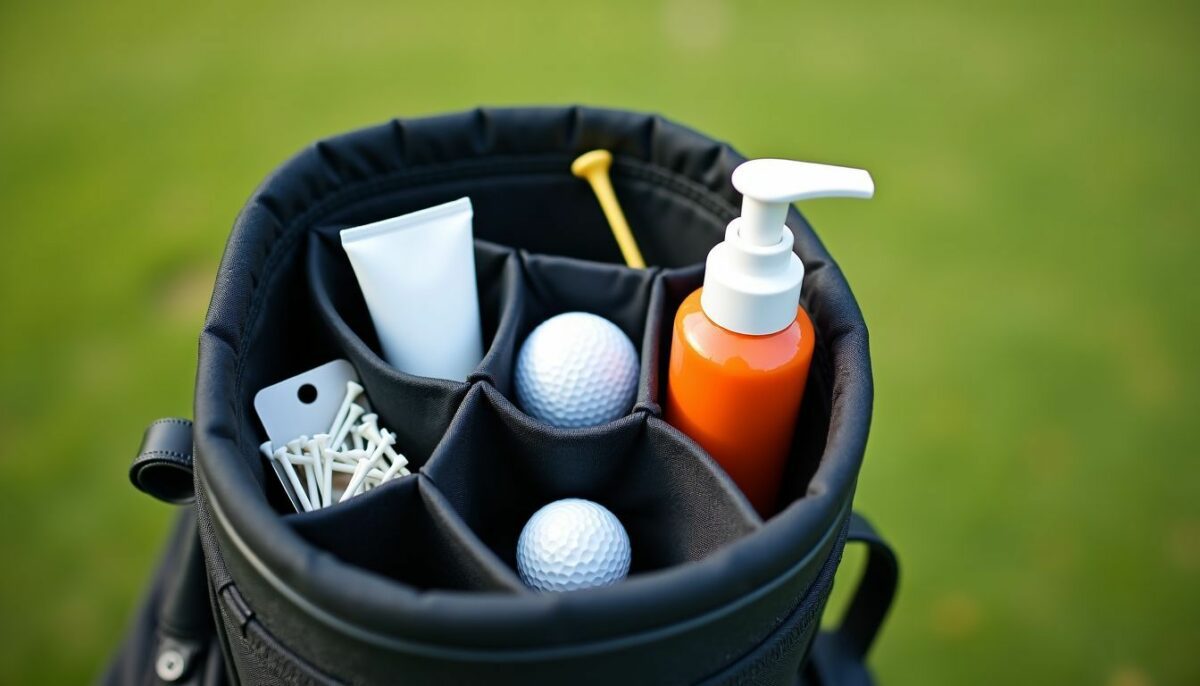
Do not overlook the small items that can save a round. A few well-chosen extras keep your game running smoothly.
Towel, Marker, Pencil, and Notepad
A towel is a must. It keeps clubs clean, dries your hands, and helps you cope with heat. A lightweight microfiber golf towel works well because it dries quickly and packs into a bag pocket.
A permanent marker lets you customize or identify your golf balls during play. Pencils are handy for scorekeeping, so pack a spare to avoid running out. A small notepad is useful for tracking swing notes or course details.
Together, these simple items make every round smoother.
Conclusion
Packing a golf bag does not have to be complicated. With the right gear, every round runs more smoothly, and a clear checklist helps you stay organized and ready for whatever the course throws at you.
From clean clubs to sunscreen, each item plays its part. A prepared golfer plays with more confidence.
FAQs
1. What are the must-have golf bag essentials?
Your golf bag should include golf balls, tees, a divot repair tool, ball markers, and at least one golf glove. Don’t forget a towel for cleaning your clubs and hands.
2. Should I pack food or drinks in my golf bag?
Yes. Bring energy bars to keep your energy up and a water bottle to stay hydrated on the course. A round can take several hours, so a little preparation helps.
3. Why do I need multiple pockets in my golf bag?
Golf bags with extra pockets help you organize items like groove cleaners, bug spray, training aids, and other accessories without everything ending up in one place.
4. Do cart bags differ from stand bags when it comes to packing gear?
Cart bags offer more storage for towels or extra gloves but are heavier. Stand bags are lighter and easier to carry if you walk the course.
5. Is there anything people often forget when preparing their golf bag?
Many golfers forget small but important items like ball markers or a divot repair tool until they need them mid-round. Always double-check your bag before heading out.