

For most golfers, the best golf travel bag is a well-padded soft cover with inline skate wheels and a stiff arm inside — it protects a full set on a normal airline itinerary at half the weight and a fraction of the storage footprint of a hard case. If you fly many times a year, or you are trusting a one-piece driver build to baggage handlers, a hybrid hard-top or a full hard case earns its extra bulk. This guide walks through that decision first, then covers nine current bags — from budget covers to a polycarbonate case — so you can match the protection level to the way you actually travel.
Key Takeaways
- Soft covers with a stiff arm handle most airline trips; hard and hybrid cases suit frequent flyers and expensive club builds.
- The Club Glove Pro Traveler is the strongest all-around choice: heavy-duty fabric, a stiff arm and a TSA lock included, and a five-year warranty.
- On a budget, the CaddyDaddy Constrictor 2 covers the essentials — wheels, lockable zippers, and a one-year replacement warranty.
- Major US airlines generally treat a golf bag as a standard checked bag, with overweight fees typically starting around 50 lbs — limits and fees vary by carrier (verify).
- The empty bag’s weight counts against that limit, so a lighter cover buys you packing room for shoes and clothes.
The Picks at a Glance
Here is how the nine bags in this guide compare before the full breakdowns.
| Pick | Verdict | Type | Standout traits | Main trade-off |
|---|---|---|---|---|
| Club Glove Pro Traveler | Best overall | Soft cover | 2000D polyester, stiff arm and TSA lock included, inline skate wheels, five-year warranty | Premium price |
| CaddyDaddy Constrictor 2 | Best budget | Soft cover | 1800D fabric, two oversized pockets, lockable zippers, one-year replacement warranty | Thinner padding than premium covers |
| Bag Boy T-750 | Best mid-range | Soft cover | Four-sided padded top, fits 48-inch drivers, lockable wrap-around zipper | No stiff arm included |
| Sun Mountain ClubGlider Meridian | Easiest to maneuver | Soft cover with leg system | Retractable legs carry the bag’s weight, 1680D ballistic nylon, full-length zippers | Heavier than most soft covers |
| Club Glove College Traveler | Best for stand bags | Soft cover | 8 lbs, stiff arm included, 1000D nylon, two exterior pockets | Snug fit for large cart bags |
| TourTrek TC Pro | Lightest | Soft cover | 6.6 lbs, 360-degree padded top, full-length horseshoe zipper, inline wheels | Light on padding below the top |
| CaddyDaddy Phoenix | Most spacious | Soft cover with molded front | 52 x 15 x 19 in., three shoe pockets, EVA-molded front, self-standing | Big footprint can sag mid-bag |
| CaddyDaddy Enforcer | Best hybrid | Hard top, soft body | ABS-molded hard top over the clubheads; soft body folds flat for storage | Bulkier than a plain soft cover |
| Tumi Golf Hardside 2 Wheeled Case | Best splurge | Hard case | Polycarbonate shell, integrated TSA lock, interior padding and tie-down straps | Price, and hard-shell weight |
The full breakdown of each pick follows below.
How to Choose a Golf Travel Bag

Four decisions do most of the work: hard or soft, stiff arm or not, how the bag moves, and how it fits airline rules. Get those right and the brand choice becomes much easier.
Hard case vs. soft cover: the real decision
A hard case is a rigid shell — polycarbonate or ABS — that holds its shape when other luggage lands on top of it. A soft cover is a padded fabric bag that relies on its foam, on how you pack it, and ideally on a stiff arm to protect the clubs inside.
The honest framework looks like this. Choose a soft cover if you fly a few times a year, need the bag to disappear into a closet between trips, and want the lightest thing you can drag through a terminal. Choose a hard or hybrid case if you fly often, carry clubs you could not easily replace mid-trip, or want the strongest position if you ever file a damage claim — some carriers limit their liability for clubs that are not packed in a hard-sided case, so check your airline’s policy before relying on a soft bag (verify).
The middle path is the hybrid: a molded hard top over the clubheads — the part that actually breaks — with a soft body below. You get most of the protection where it matters and most of the convenience everywhere else.
The stiff arm: cheap insurance for any soft cover
A stiff arm is a telescoping support rod that stands inside the bag, extending an inch or two above your longest club. When a suitcase lands on the cover, the rod takes the impact instead of your driver shaft. It is the single most effective upgrade you can make to any soft travel bag.
Club Glove includes one with both of its travel bags in this guide; for other soft covers, it is a small separate purchase that costs far less than one replacement shaft. Extend it fully, seat it against the base of the bag, and pack towels around the clubheads so nothing rattles.
Wheels, legs, and how the bag actually moves
Almost every serious travel bag now rolls on inline skate wheels, which glide over terminal floors and survive curbs. The differences show up in the details. Sun Mountain’s ClubGlider system adds retractable legs that carry the bag’s full weight, so you steer it like a cart instead of dragging 40 lbs off one shoulder. The Izzo High Roller takes another route with a six-wheel base — four swivel wheels for rolling the bag upright, plus two inline wheels for towing it.
If you routinely connect through big airports, these maneuverability features matter more than they look on paper. A long walk between terminals with a loaded two-wheel cover is a workout; the same walk with a leg system is not.
Airline rules: weight, size, and fees
Major US airlines generally accept a golf travel bag as one piece of standard checked baggage, with the usual checked-bag fee for your fare and route. Two numbers matter more than the fee itself. First, the overweight threshold — commonly around 50 lbs — where charges jump sharply; the empty bag’s own weight counts against it. Second, size: carriers typically waive standard oversize charges for golf bags within reason, but very large cases can still hit hard limits. Policies differ by airline and change without notice, so check your carrier’s sports-equipment page before you book (verify).
The practical takeaway: a 6-to-9 lb cover leaves you roughly 40 lbs for clubs, shoes, and clothes. A heavy hard case eats a large share of the allowance before a single club goes in.
Best Overall: Club Glove Pro Traveler

The Club Glove Pro Traveler is the travel bag you see stacked outside tour vans, and the current model is the most complete package in this guide. MyGolfSpy named it the best premium golf travel bag of 2025.
The current Pro Traveler is built from 2000-denier polyester as a single-piece body with a reinforced base, and it measures 53 x 15 x 13 inches at 11.4 lbs empty. The clubhead area is fully padded and velour-lined through 360 degrees, and — unlike most rivals — the stiff arm and a TSA-approved combination lock are included rather than sold separately. Inline skate wheels sit on a shock-absorbing wheelbase, and the bag is compatible with Club Glove’s Train Reaction System, which lets you hook a suitcase to the front and tow both as one unit. Club Glove backs it with a five-year limited warranty.
The trade-offs are simple: it costs considerably more than mainstream covers, and at over 11 lbs empty it is not the pick for travelers fighting a strict weight limit. There are also no dedicated shoe compartments — you pack around the clubs. For golfers who fly with clubs several times a year and want one bag that ends the conversation, this is it.
Best Budget: CaddyDaddy Constrictor 2

The CaddyDaddy Constrictor 2 has been one of the best-selling soft covers on the market for years, and it is still current in 2026 for a reason: it covers every essential at a price that typically sits near the hundred-dollar mark (verify).
The body is 1800-denier fabric — roughly three times the thickness of the 600D material used in bargain covers — with padding concentrated at the top where clubheads ride. Two oversized exterior pockets swallow shoes and extra gear, two external cinch straps plus an internal strap keep the bag from shifting in transit, and the zippers are lockable. It rolls on inline skate wheels, and CaddyDaddy backs it with a one-year full replacement warranty.
What you give up is padding depth: protection is thinner than on premium covers, so a stiff arm and deliberate packing are not optional here — they are part of the deal. Accept that, and the Constrictor 2 remains the default answer for occasional flyers who want their money in their clubs, not their luggage.
Best Mid-Range: Bag Boy T-750
The Bag Boy T-750 is the mainstream pick between the budget covers and the premium tier, and it earns the slot with one feature the cheaper bags skip: an extra-thick padded top with high-density foam on all four sides, so the clubhead area is protected from every direction rather than just above.
The interior measures roughly 53 x 12.5 x 10 inches, fits most cart and stand bags, and accommodates drivers up to 48 inches — useful now that long builds are common. A lockable full wrap-around zipper opens the bag flat for easy loading, an internal compression strap pins the golf bag in place, and inline skate wheels handle the rolling. At about 8.5 lbs empty, it undercuts most premium covers on weight.
No stiff arm is included, and the slimmer profile means less room for stuffing extra clothing than the oversized CaddyDaddy covers offer. As a balanced package of protection, weight, and price, though, the T-750 is hard to argue with.
Easiest to Maneuver: Sun Mountain ClubGlider Meridian

The Sun Mountain ClubGlider Meridian solves the problem every other soft cover ignores: dragging the weight. Its patented leg mechanism extends and retracts in one motion, and with the legs down the bag carries its own weight — you steer instead of haul. MyGolfSpy named it its Most Wanted travel bag for both 2025 and 2026.
The current Meridian is built from 1680-denier ballistic nylon with reinforcement in high-wear areas and a PU coating with a DWR finish to keep weather out. Interior dimensions of 52 x 14 x 14 inches take most cart and stand bags, dense foam pads the top section, heavy-duty two-way zippers run the full length of the bag for easy loading, and two exterior pockets handle shoes and extras.
The cost of the leg hardware is mass: at 11.3 lbs empty, the Meridian is one of the heavier soft covers here, which matters against a 50 lb airline ceiling. If your trips involve long terminal walks, rental-car shuttles, and hotel lobbies, the legs pay for that weight many times over.
Best for Stand Bags: Club Glove College Traveler
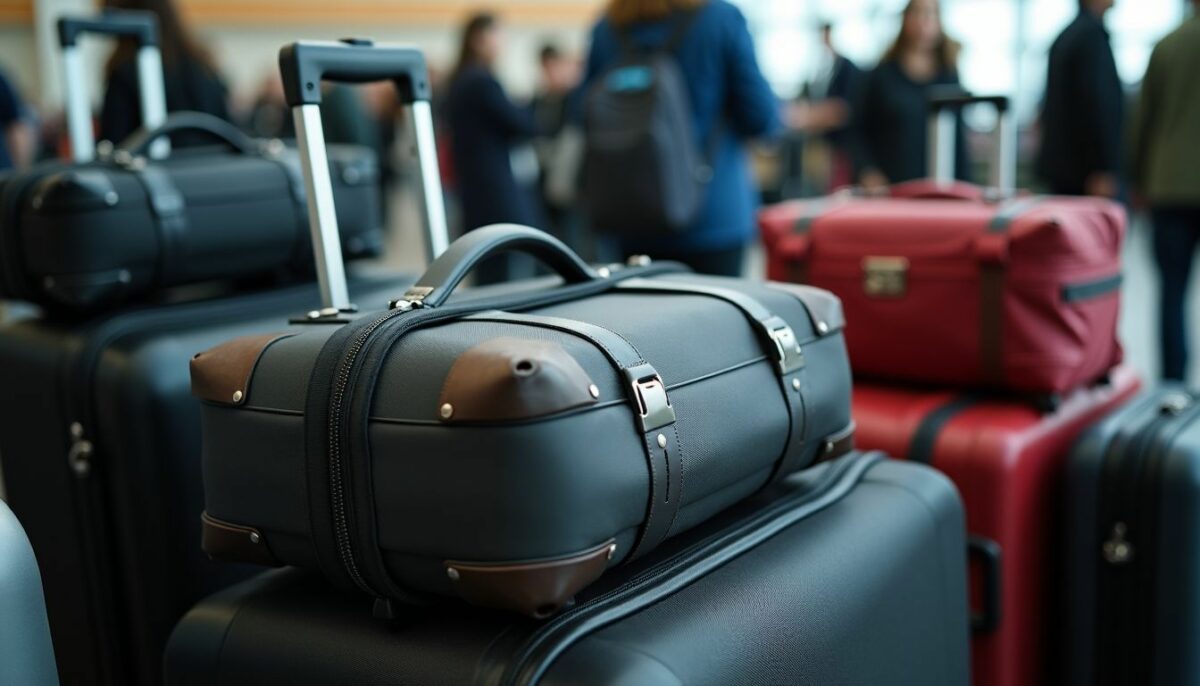
The College Traveler is Club Glove’s compact model — the current version of the bag sold in earlier years as the Collegiate — sized for the stand and carry bags most traveling golfers actually bring. If a full-size Pro Traveler is more bag than your setup needs, this is the same idea scaled down.
It measures 51 x 15 x 14 inches, weighs 8 lbs empty, and is built from water-resistant 1000-denier nylon with premium YKK zippers and ITW Nexus buckles. A stiff arm comes included, the wheelbase uses the same high-impact design as its bigger siblings, two external pockets take small gear, and it is compatible with the Train Reaction System for towing a suitcase.
The fit is the point and the limitation: a large cart or staff bag will be a squeeze or simply will not go. Pair it with a stand bag and you get Club Glove build quality at 3 lbs less than the Pro Traveler — weight you can spend on shoes and rain gear instead.
Lightest: TourTrek TC Pro
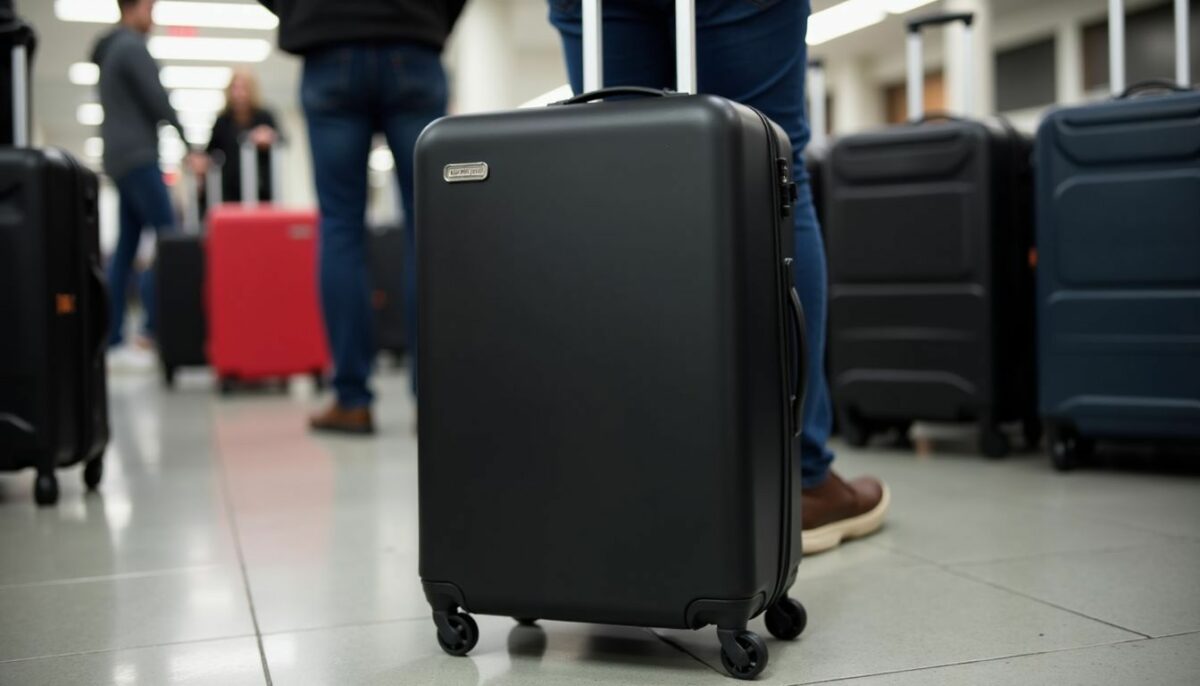
At 6.6 lbs, the TourTrek TC Pro is the lightest wheeled cover in this guide — nearly 5 lbs under the premium bags. That difference is pure packing allowance on a weight-limited itinerary, and it is why this Golf Galaxy house-brand cover keeps a place in the roster.
The 52 x 14 x 14 inch body fits most stand and cart bags. Padding is concentrated in a 360-degree ring around the clubhead area, a full-length horseshoe zipper opens the bag wide for loading, and it rolls on inline wheels with a reinforced base. Top and duffle-style handles make lifting it into a trunk or onto a scale easy.
The compromise is exactly where you would expect: below the padded top, the walls are thin, and there is no stiff arm in the box. Treat the TC Pro as a shell that depends on smart packing — stiff arm in, towels around the heads, soft clothing filling the voids — and it delivers the best weight-to-protection ratio here for the money.
Most Spacious: CaddyDaddy Phoenix
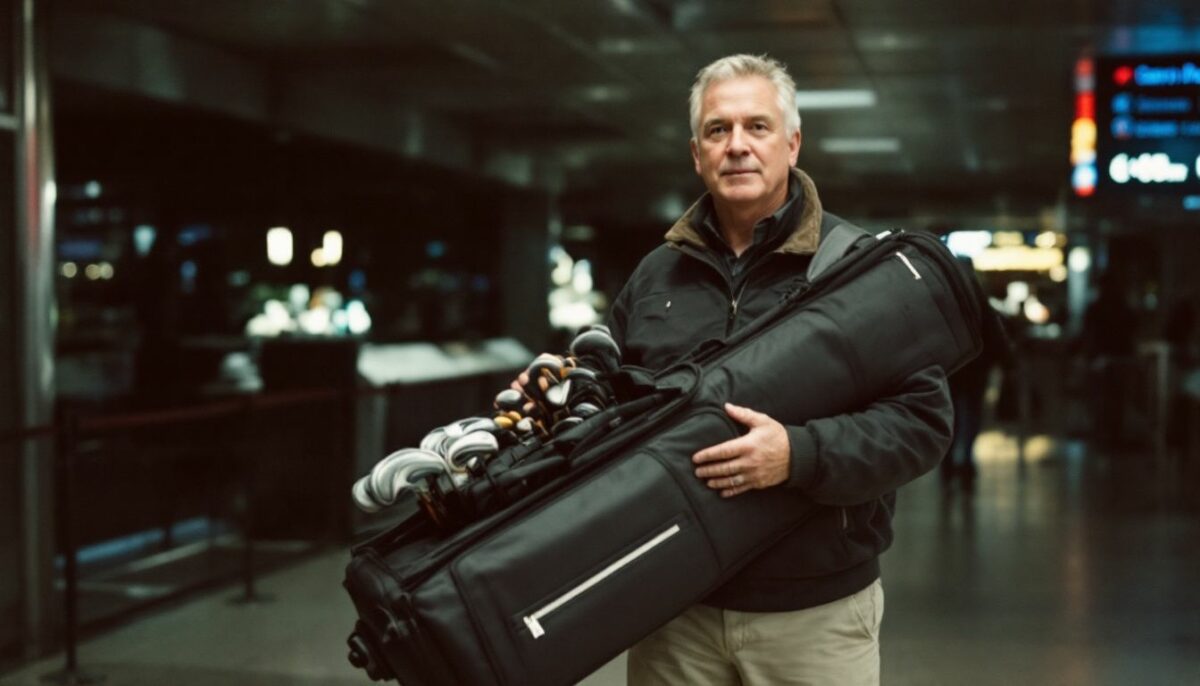
The CaddyDaddy Phoenix replaces the generic wheeled cover we previously listed in this slot — it is the largest travel cover CaddyDaddy makes, and the one to buy when the golf bag is only half of what you are checking.
At 52 x 15 x 19 inches, it takes staff bags and large cart bags that snug covers refuse, and it adds three oversized shoe pockets on the outside. An EVA-molded front panel stiffens the zone over the clubheads, internal and external straps lock the bag in place, the base is self-standing, and it rolls on inline skate wheels. Like the Constrictor 2, it carries CaddyDaddy’s one-year full replacement warranty, which covers airline damage.
Reviewers at Plugged In Golf found the internal straps and molded front do their job, but noted a loaded Phoenix can sag slightly in the middle — a reminder that a bag this size still wants a stiff arm and firm packing. If you routinely check clubs, shoes, and half a wardrobe in one piece, this is the roomiest way to do it.
Best Hybrid: CaddyDaddy Enforcer Hard Top
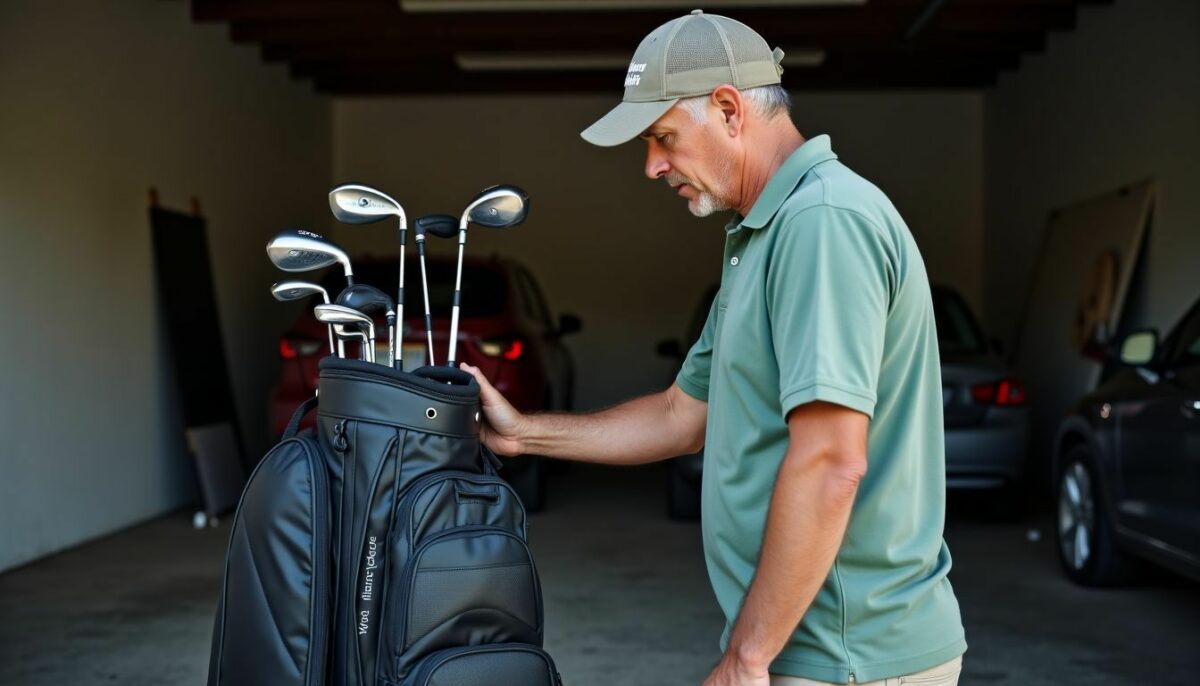
The CaddyDaddy Enforcer is the properly named current version of the hard-case-top hybrid we recommended before, and the concept still makes sense: put rigid protection over the clubheads — the part baggage handlers break — and keep a flexible soft body everywhere else.
The top is custom-molded ABS plastic that resists crushing outright; the body below is the same 1800-denier fabric as CaddyDaddy’s soft covers. At 50 x 15 x 13 inches and about 9 lbs, it weighs no more than many plain covers, a full wraparound zipper makes loading far easier than on clamshell hard cases, and oversized lockable zippers plus inline skate wheels round out the travel kit. Between trips the soft body folds flat, so it stores far more easily than a rigid clamshell case.
The hybrid layout is bulkier in transit than a plain cover, and the soft lower body still benefits from careful packing around the shafts. As a middle path between a fabric bag and a full polycarbonate case, the Enforcer gives you most of the protection for a fraction of the weight and price.
Best Splurge: Tumi Golf Hardside 2 Wheeled Travel Case

The Tumi Golf Hardside 2 Wheeled Travel Case is the full hard case in this lineup — a polycarbonate shell in Tumi luggage styling for golfers who want maximum protection and do not mind paying luxury-luggage money for it (verify current pricing).
The case measures 54.4 x 17.1 x 13.5 inches and is built to swallow a stand or cart bag with clubs inside. A zip entry opens the main compartment, an integrated TSA lock secures it, and the interior is finished with top padding on both lids, tie-down straps, and a hanging zip pocket for accessories. Two recessed wheels plus feet on the side and back let it roll upright or lie flat without scuffing the shell.
The drawbacks are inherent to the format: a polycarbonate case is heavier and bulkier than any fabric cover, it does not fold away between trips, and the price sits far above everything else here. For golfers flying with a high-value build who want the strongest possible packaging — and the clearest damage-claim position — it is the no-compromise option.
Travel Bags and the Long-Haul Golf Trip
Long-haul golf travel raises the stakes: more connections mean more handling, and a damaged driver is much harder to replace mid-trip in another country than at home. For itineraries like Thailand — where many readers of this site are headed — a stiff arm stops being optional, and a hybrid or hard case is worth serious thought if your trip is built around the golf.
Two practical notes for that kind of trip. First, weigh the loaded bag at home; long-haul carriers enforce weight limits and the fees at the desk are steep (verify your airline). Second, confirm how your clubs get from the airport to the course — vans booked through a golf package handle oversized luggage as standard, while ordinary taxis may not fit a travel case. If you are still sketching the itinerary, our Thailand golf trip planner covers the logistics end to end.
Frequently Asked Questions
What is the best golf travel bag?
For most golfers, the Club Glove Pro Traveler is the best golf travel bag: heavy-duty single-piece construction, a stiff arm and TSA lock in the box, and a five-year warranty. On a tighter budget, the CaddyDaddy Constrictor 2 plus a separately purchased stiff arm protects a set well for far less.
Do I need a hard case to fly with golf clubs?
Not necessarily. A padded soft cover with a stiff arm and careful packing handles most itineraries. A hard or hybrid case makes sense for frequent flyers, multi-leg international trips, and expensive builds — and some airlines limit damage liability for clubs not packed in hard-sided cases, so check your carrier’s policy (verify).
Can I pack shoes and clothes in a golf travel bag?
Yes, and you should — soft items double as padding. Shoes, towels, and smaller accessories fill the voids around your clubs, and bags like the CaddyDaddy Phoenix add dedicated shoe pockets. Just weigh the loaded bag before you leave: the airline limit includes everything, cover included.
How do I protect clubs inside a travel bag?
Extend a stiff arm above your longest club, take the driver head off if it is adjustable and stow it in a pocket, wrap towels around the remaining clubheads, and cinch the internal straps so nothing shifts. Most club damage comes from movement and top-down impact; those four steps address both.
A golf travel bag is the cheapest insurance you will ever buy for your clubs. Match the protection level to how often you fly and what your set is worth, pack it deliberately, and the bag disappears into the background of the trip — exactly where luggage belongs.
Part of our golf gear buying guides.